
Common Mistakes When Investing in Bali Villas
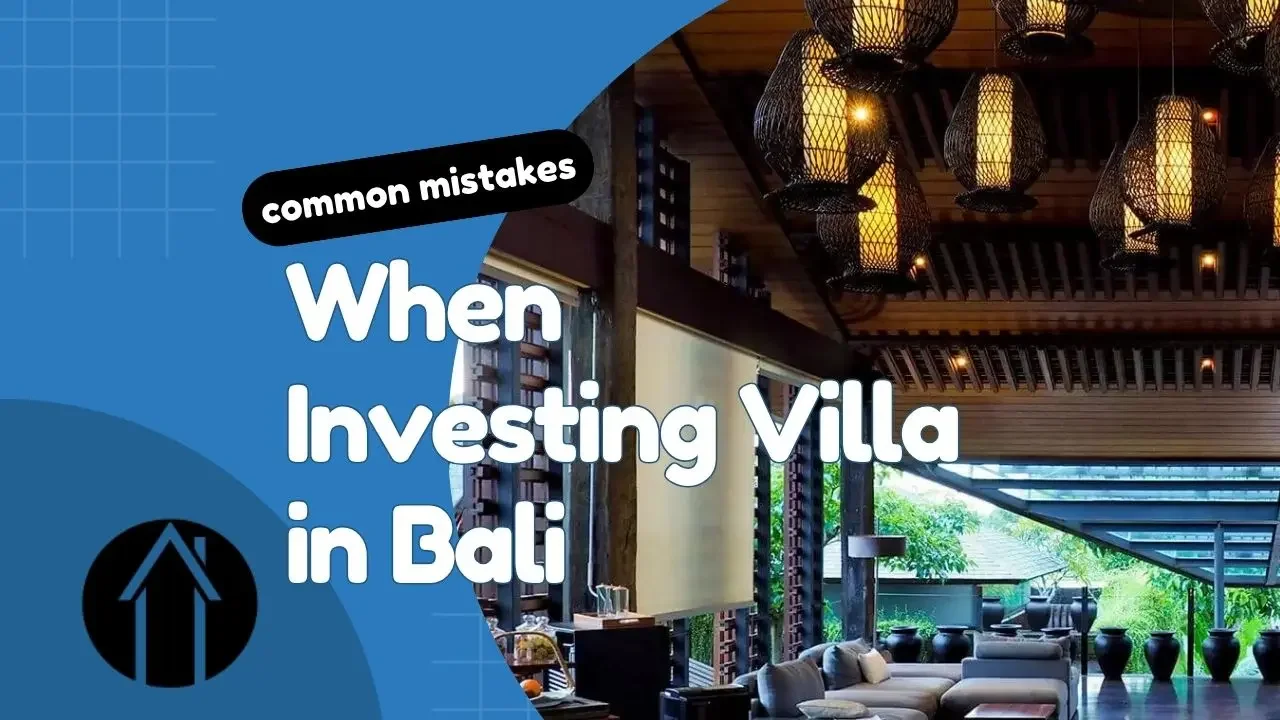
From the outside, Bali’s villa market can look deceptively simple. Beautiful properties, strong tourism demand, and the promise of lifestyle-driven income attract investors from around the world every year.
Yet behind many underperforming villas is the same reality:
👉 The investment itself was not the problem; the strategy was.
In Bali, successful villa investments are rarely built on a single good decision. They are built through alignment between location, design, construction, operations, and guest experience.
The challenge is that many investors only realize this after costly mistakes have already been made.
Mistake #1 — Choosing a Location Based Only on Trends
A popular area does not automatically guarantee strong performance.
Many investors rush into locations simply because they are “hot” on social media or heavily discussed online. But trends can shift quickly, and different areas attract different types of guests.
A villa designed for retreat travelers may struggle in a nightlife-focused market, while a party-oriented property may feel out of place in a wellness destination.
The strongest investments are usually built around long-term positioning, not short-term hype.
Mistake #2 — Underestimating Operational Complexity
Owning a villa in Bali is very different from owning a traditional residential property.
Behind every successful rental property is an ongoing operational system involving:
guest communication
housekeeping
maintenance
staffing coordination
pricing adjustments
booking management
Many investors initially assume villa ownership will function like passive income. In reality, hospitality performance requires daily execution.
This is often where experienced management becomes one of the most valuable parts of the investment.
Mistake #3 — Prioritizing Cheap Construction Over Long-Term Quality
Trying to reduce upfront construction costs can create much larger expenses later.
Bali’s tropical climate places constant pressure on buildings through:
humidity
heat
heavy rain
salt air in coastal areas
Low-quality materials and shortcuts in construction often lead to:
faster deterioration
higher maintenance costs
weaker guest experience
Investors focused on long-term performance typically prioritize durability, functionality, and timeless design over short-term savings.
Mistake #4 — Creating Generic Villa Design
The Bali villa market has become increasingly competitive.
Guests are no longer simply booking “a villa with a pool.” They are choosing properties that feel memorable, distinctive, and visually compelling.
Generic villas often struggle because they:
blend into crowded booking platforms
lack emotional appeal
fail to justify premium pricing
Strong design today is not just aesthetic—it is part of the marketing strategy itself.
Mistake #5 — Expecting Fully Passive Income
This is one of the most common misconceptions among overseas investors.
A villa may generate income, but it still requires:
operational oversight
consistent maintenance
guest experience management
marketing optimization
Without systems in place, small issues can quickly affect reviews, occupancy, and long-term performance.
This is why many experienced investors eventually shift toward structured management solutions that allow them to stay hands-off while maintaining operational consistency.
Mistake #6 — Ignoring Guest Experience
Beautiful architecture may attract bookings initially, but guest experience determines whether a property continues to perform.
Travelers increasingly value:
responsiveness
cleanliness
personalized service
smooth communication
Even small operational inconsistencies can lead to weaker reviews and reduced pricing flexibility.
The villas that consistently outperform the market are usually those that combine strong design with strong hospitality systems.
Mistake #7 — Weak Marketing and Positioning
Many villas are well-built but poorly positioned.
In today’s market, visibility depends heavily on:
photography
branding
storytelling
online presentation
Without clear positioning, even high-quality villas can struggle to stand out.
Successful properties understand who their target guests are and build the entire experience around that audience.
Mistake #8 — Thinking Short-Term Instead of Long-Term
Some investors focus too heavily on immediate returns without considering:
long-term maintenance
evolving guest expectations
market positioning
operational sustainability
The strongest-performing villas are usually designed to remain competitive over time, not just during their first year.
How Smart Investors Reduce Risk
Experienced investors tend to approach Bali villa projects as hospitality businesses rather than simple property purchases.
This means thinking holistically about:
concept
design
construction quality
operational systems
guest experience
long-term positioning
Instead of solving problems after they appear, the goal becomes building a system that minimizes risk from the beginning.
That is where integrated partners can make a major difference.
Companies like Villasa help investors align every stage of the process, from concept and development to management and guest experience, so that the property is built not only to look attractive, but also to perform consistently over time.
FAQ — Bali Villa Investment Mistakes
What is the biggest mistake investors make in Bali villas?
Underestimating how important operations and management are to long-term performance.
Is location the most important factor?
Location matters, but execution, design, and guest experience are equally important.
Can poor management affect rental income?
Yes. Weak operations often lead to lower reviews, weaker occupancy, and inconsistent pricing.
Why do some villas underperform despite good locations?
Generic design, weak marketing, and inconsistent guest experience are common reasons.
How can investors reduce risk in Bali villa projects?
By taking a long-term approach and working with experienced teams across design, construction, and management.
Building a Villa Investment That Lasts
Bali continues to offer compelling opportunities for international investors, but success in this market rarely comes from a single decision.
The villas that perform best are usually the result of thoughtful planning, strong execution, and operational consistency.
For investors, the goal should not simply be to enter Bali’s villa market, it should be to build a property that remains competitive, desirable, and operationally strong for years to come.
That requires more than construction alone. It requires a strategy designed around hospitality, guest experience, and long-term performance.