
How to Start a Villa Business in Bali for International Investors
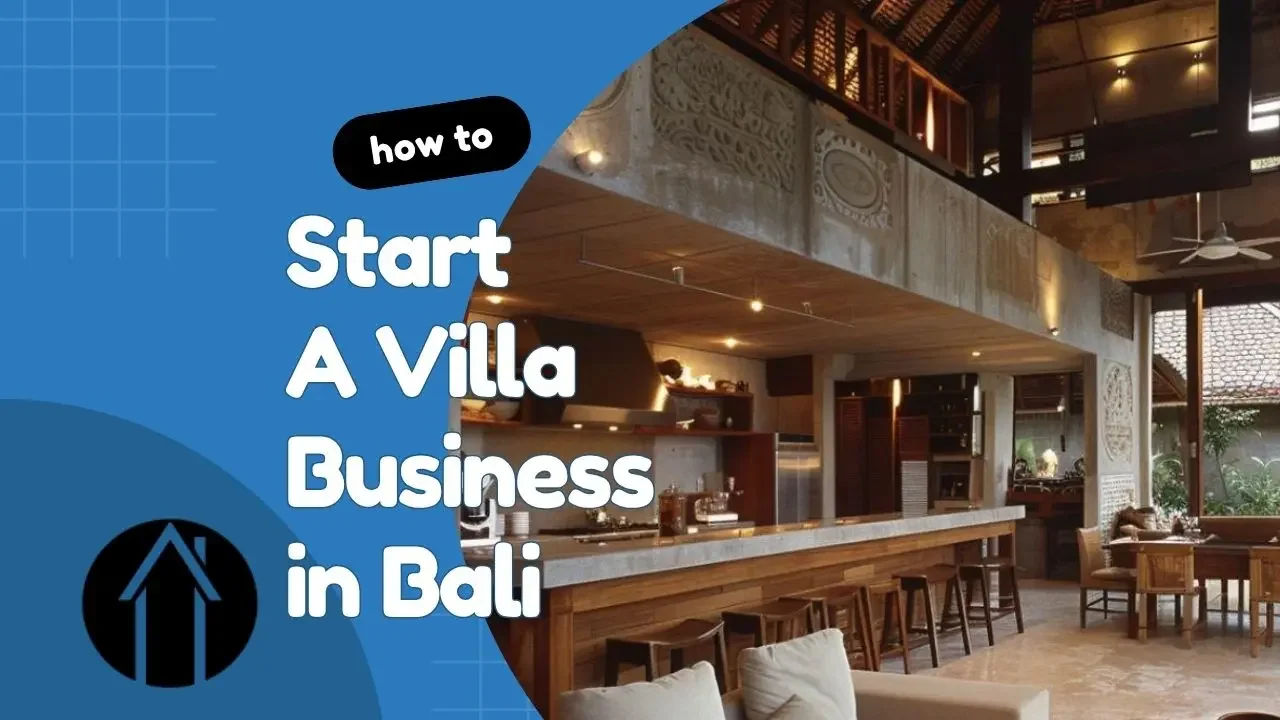
A successful villa in Bali is rarely just a property. Behind the scenes, it functions more like a hospitality business, one that depends on design, operations, guest experience, branding, and long-term management working together.
This is why many international investors eventually realize that building a villa is only one part of the journey. The real challenge is creating a villa business that continues to perform long after construction is complete.
Understanding the Difference Between a Villa and a Villa Business
Many first-time investors focus heavily on:
land acquisition
construction costs
architecture
While these are important, they are only the foundation.
A villa business also requires:
operational systems
staffing
maintenance planning
marketing strategy
guest communication
Without these elements, even visually impressive villas can struggle to generate consistent performance.
Step 1 — Define the Right Investment Strategy
Before designing or building anything, investors need clarity on the type of property they want to create.
Important questions include:
Who is the target guest?
Is the focus luxury, wellness, lifestyle, or family travel?
Will the property prioritize occupancy or premium pricing?
The strongest villa businesses usually begin with a clear positioning strategy rather than simply copying existing properties.
Step 2 — Choose the Right Location
Different areas in Bali support different business models.
For example:
Canggu attracts lifestyle-driven travelers and digital nomads
Uluwatu continues growing in the luxury segment
Ubud performs strongly for wellness and retreat concepts
Seminyak remains attractive for stable tourism demand
Choosing the right area is not just about popularity, it is about alignment between location and business concept.
Step 3 — Design for Guest Experience
In Bali’s competitive hospitality market, design has become a major business advantage.
Guests are increasingly drawn to villas that feel:
unique
visually memorable
experience-driven
Features such as:
seamless indoor–outdoor living
rooftop lounges
wellness-inspired spaces
strong natural integration
can significantly improve guest appeal.
The most successful properties are designed not only to look beautiful, but also to create an emotional connection.
Step 4 — Build With Long-Term Operations in Mind
Many investors focus only on construction cost, but operational practicality matters just as much.
A villa should be built to support:
easy maintenance
efficient staff workflow
durability in tropical conditions
smooth guest experience
This is where experienced development and construction management becomes valuable, especially for overseas investors who may not fully understand Bali’s operational realities.
Step 5 — Prepare the Operational System
Once construction is complete, the operational phase begins.
This includes:
staffing
housekeeping systems
maintenance scheduling
guest communication
pricing management
Many investors underestimate how operational consistency affects long-term performance.
The villas that perform best are usually the ones with the strongest systems behind them.
Step 6 — Build a Strong Brand and Online Presence
Today’s villa guests often discover properties online long before booking.
This makes branding and presentation essential.
Strong-performing villas usually invest in:
professional photography
clear positioning
memorable visual identity
high-quality listing presentation
In many cases, marketing quality directly influences occupancy and pricing power.
Step 7 — Focus on Guest Experience, Not Just Occupancy
High occupancy alone does not automatically create a successful villa business.
Long-term performance depends heavily on:
guest reviews
repeat bookings
reputation
This is why hospitality quality matters as much as architecture.
Guests remember how a property made them feel, not just how it looked in photos.
Why Many Investors Work With Integrated Partners
For overseas investors, coordinating every stage independently can become complex.
This often involves managing:
architects
contractors
operational staff
hospitality systems
marketing teams
Working with an integrated company simplifies the process by aligning all stages under a unified strategy.
Companies like Villasa help investors move from concept and development to ongoing villa and hotel management, ensuring that every part of the business supports long-term performance.
Common Challenges New Investors Face
Some of the most common issues include:
weak operational planning
generic villa concepts
underestimating maintenance
inconsistent guest experience
poor market positioning
Most of these problems can be avoided with proper planning and experienced guidance early in the process.
FAQ — Starting a Villa Business in Bali
Is starting a villa business in Bali profitable?
It can be, but performance depends heavily on location, design, operations, and management quality.
Do I need to live in Bali to operate a villa business?
Not necessarily. Many international investors rely on professional management teams.
Is building better than buying?
Both approaches can work depending on goals, timeline, and strategy.
What is the most important part of a villa business?
Consistency across guest experience, operations, and positioning.
Can one company handle both development and management?
Yes. Some integrated companies support investors from concept through long-term operations.
Building More Than a Property
The most successful villa businesses in Bali are rarely created by accident.
They are built through strategic decisions that connect location, design, operations, and hospitality into a single cohesive system.
For investors, the opportunity is no longer just about owning property in Bali. It is about creating an experience-driven business that can remain competitive in an increasingly sophisticated market.
That is why many experienced investors now approach Bali villas not simply as real estate, but as long-term hospitality assets designed for performance.