
How Bali Rental Yield Works for Villa Investors
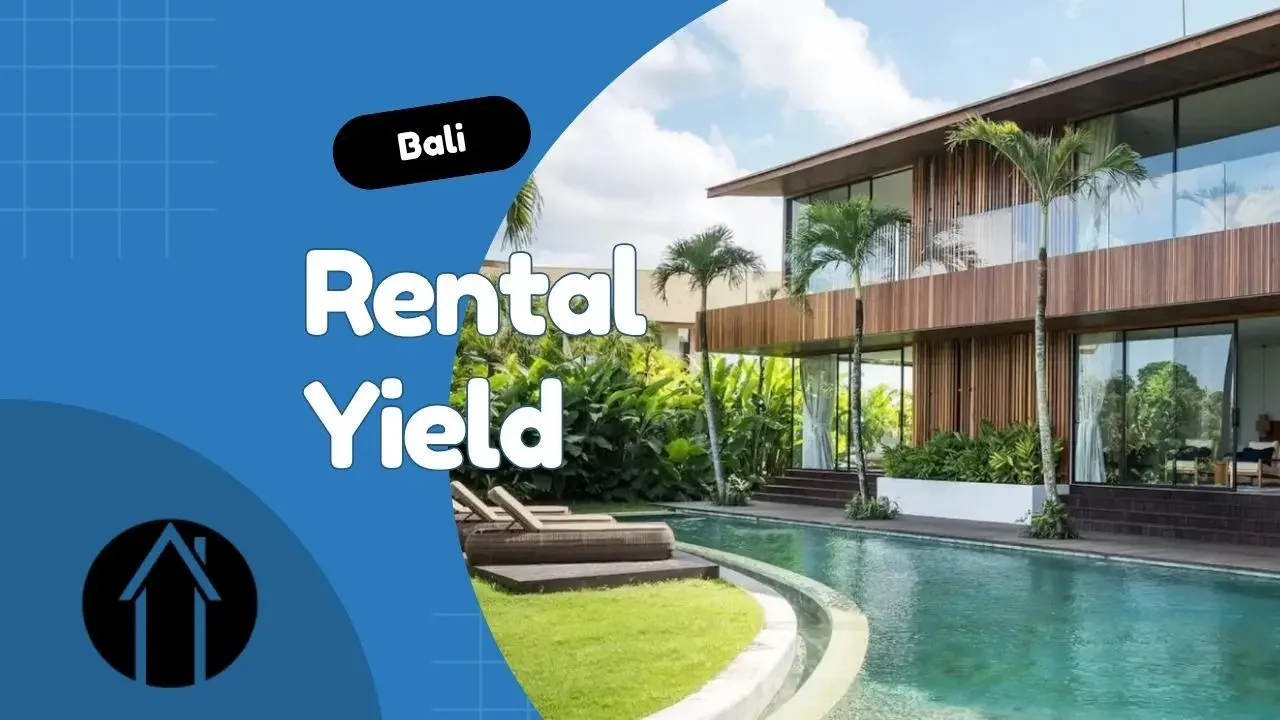
Rental yield is one of the most frequently discussed topics in Bali’s property market.
For many investors, it becomes the primary way to evaluate whether a villa project makes financial sense. But unlike traditional residential real estate, rental yield in Bali is influenced by much more than occupancy and nightly rates alone.
A villa here operates within a hospitality-driven ecosystem where design, guest experience, operations, branding, and location all shape long-term performance.
That is why understanding rental yield in Bali requires looking beyond simple formulas.
What Rental Yield Means for Bali Villas
In basic terms, rental yield refers to how effectively a property generates income relative to its overall investment cost.
For Bali villas, this may include:
rental performance
occupancy consistency
operational efficiency
long-term competitiveness
However, unlike standard residential rentals, villa performance can fluctuate based on tourism patterns, market positioning, and operational quality.
Why Bali’s Villa Market Is Different
Bali’s rental market behaves more like hospitality than conventional real estate.
Guests are not simply renting space, they are choosing:
experiences
atmosphere
design
service quality
This means villas compete not only on price, but on emotional appeal and guest satisfaction.
A visually compelling villa with strong hospitality systems often performs very differently from a generic property in the same area.
The Biggest Factors That Influence Rental Yield
Location
Different areas support different investment profiles.
Canggu tends to attract high booking volume
Uluwatu appeals to luxury-focused travelers
Ubud performs strongly in wellness and retreat markets
Seminyak remains stable and established
The best location depends on the intended business model.
Design and Visual Identity
In a digital-first booking environment, design has become a major performance driver.
Properties with:
distinctive architecture
strong photography
memorable layouts
often achieve stronger guest engagement and pricing flexibility.
Operations and Hospitality Quality
Operational consistency directly impacts:
guest reviews
repeat bookings
overall reputation
Even strong properties can underperform when operations feel inconsistent or poorly managed.
Market Positioning
Some villas compete on affordability, while others compete on exclusivity and experience.
The strongest-performing properties usually have clear positioning and a defined target audience.
Gross Yield vs Real Operational Performance
One of the most common investor mistakes is focusing only on theoretical revenue projections.
In practice, villa ownership also includes:
staffing
maintenance
utilities
repairs
marketing
management systems
This is why experienced investors tend to evaluate performance more holistically rather than relying on headline numbers alone.
Why Some Villas Outperform Others
Two villas with similar budgets can produce very different outcomes.
Often, the difference comes down to:
concept quality
guest experience
operational execution
long-term maintenance
branding consistency
The Bali market increasingly rewards villas that feel intentional and experience-driven.
Long-Term Yield Depends on Sustainability
Some villas perform strongly in the short term but decline over time due to:
aging design
poor maintenance
inconsistent management
inability to adapt to guest expectations
Long-term performance usually comes from creating properties that remain relevant and operationally strong over many years.
Why Integrated Strategy Matters
The strongest-performing villa investments are rarely created through isolated decisions.
Instead, they align:
concept
architecture
construction quality
operations
hospitality systems
marketing strategy
This integrated approach helps reduce friction between development and long-term performance.
Companies like Villasa increasingly work within this model, helping investors connect the entire hospitality ecosystem rather than treating design, construction, and management as separate stages.
Common Misunderstandings About Rental Yield
Some investors assume:
high nightly rates automatically mean strong performance
occupancy alone determines profitability
luxury properties always outperform
In reality, sustainable yield depends on balance and operational consistency.
FAQ — Bali Rental Yield
What affects rental yield the most in Bali villas?
Location, design quality, operations, guest experience, and market positioning all influence long-term performance.
Is rental yield guaranteed in Bali?
No. Performance depends heavily on execution, management quality, and market conditions.
Do luxury villas always produce stronger yield?
Not necessarily. Success depends on alignment between concept, location, and operations.
Why do some villas underperform despite strong locations?
Weak positioning, inconsistent hospitality, and generic design are common reasons.
How do investors improve long-term performance?
By focusing on integrated strategy rather than only acquisition or construction.
Looking Beyond the Numbers
Rental yield is an important part of evaluating a Bali villa investment, but it should never be viewed in isolation.
The villas that continue to perform over time are usually those built around a clear concept, strong hospitality systems, and long-term operational thinking.
For investors, success in Bali increasingly depends not just on owning a property, but on creating an experience-driven asset capable of remaining competitive in an evolving global hospitality market.