
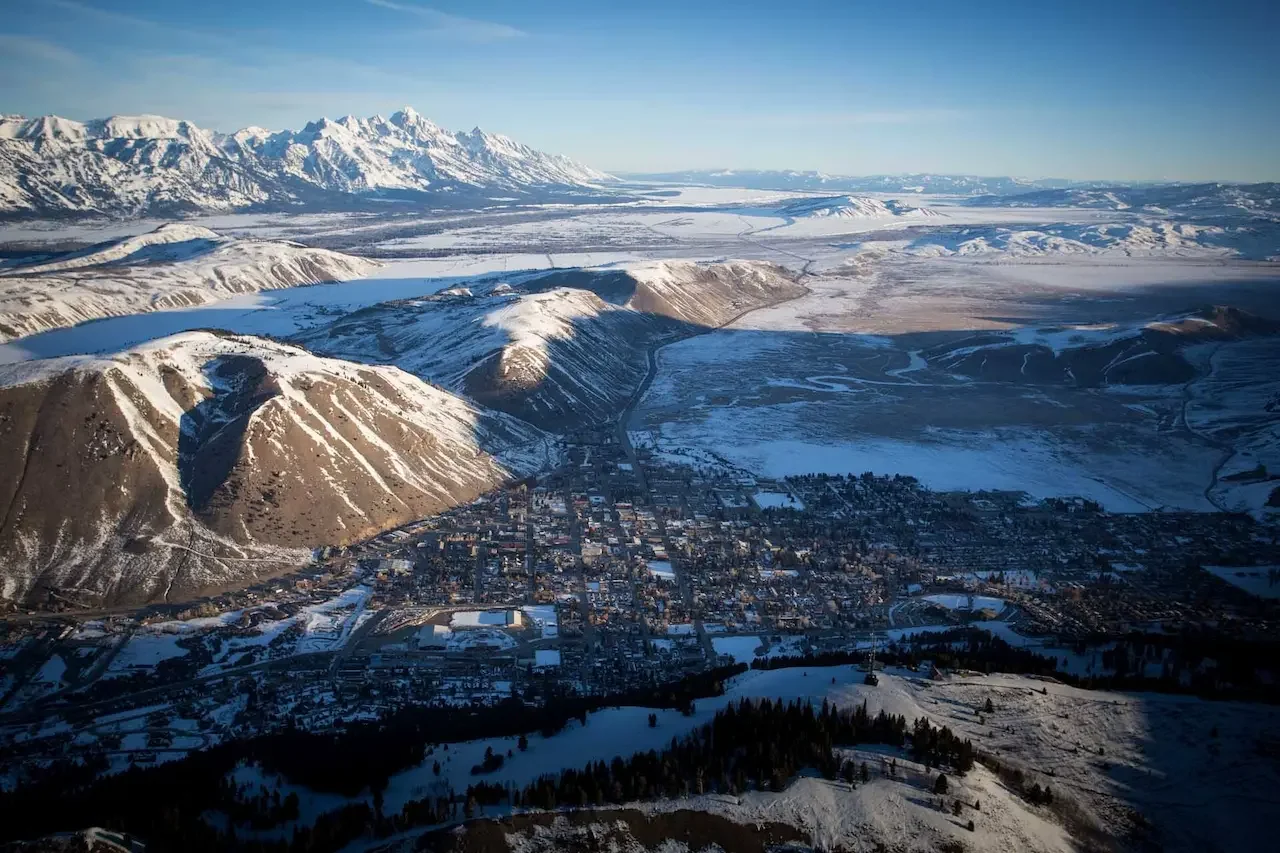
The town of Jackson sits at roughly 6,237 feet (1,901 meters) above sea level, and Jackson Hole Mountain Resort's summit reaches about 10,450 feet (3,185 meters). That's high enough for altitude to affect how you feel — especially in the first day or two, especially if you're coming from sea level, and especially if you're skiing or hiking hard.
We operate in this valley, so we see this catch visitors every season. Here's what the elevation actually means for your trip and how to handle it.
How high is Jackson Hole?
A few numbers to orient you:
Town of Jackson: ~6,237 ft / 1,901 m
Teton Village (ski base): ~6,311 ft / 1,924 m
Jackson Hole Mountain Resort summit: ~10,450 ft / 3,185 m
Grand Teton peak: 13,775 ft / 4,199 m (you won't be on top of it, but it's right there)
So even at the valley floor, you're already a mile and a quarter above sea level. At the top of the resort, you're at two miles. That matters.
Can you feel the altitude in Jackson Hole?
Most people do, at least mildly. Common effects in the first 24 to 48 hours include:
Shortness of breath during exertion that would feel easy at sea level.
Fatigue — feeling more tired than expected, especially after travel.
Headache — the most common altitude symptom.
Trouble sleeping the first night or two.
Dehydration — altitude dries you out faster than you'd expect.
These are normal at this elevation for someone arriving from near sea level, and they usually pass within a day or two as your body adjusts. For most visitors it's an inconvenience, not a crisis. But it's worth taking seriously, because ignoring it — skiing hard on your first afternoon, drinking heavily after a long flight — makes it worse and can ruin the start of a trip.
How to handle the elevation
Practical steps, nothing dramatic:
Drink more water than you think you need, starting before you arrive and continuing throughout. Altitude dehydrates you.
Take it easy on day one. Arrive, settle in, eat well, sleep. Don't ski a full day or do a big hike straight off the plane.
Go easy on alcohol the first evening. It hits harder at altitude, and combined with travel and dehydration it can flatten you.
Expect to sleep poorly the first night. It's normal. It passes.
If you're hiking or skiing at the summit elevations, pay attention to how you feel and come down if symptoms worsen. Headache that gets worse with exertion, nausea, or dizziness are signs to descend.
Most visitors adjust within 24 to 48 hours and feel fine from day two onward. If you have a medical condition affected by altitude, talk to your doctor before the trip — this isn't medical advice, just practical orientation.
Does elevation change by season?
The elevation doesn't change, but how you experience it does. In winter, you're more likely to feel it because cold and exertion (skiing) compound the effect, and dehydration from cold dry air is easy to miss. In summer, hiking at high elevations above the valley floor means you're climbing into thinner air, so pace yourself, carry water, and check weather before heading up.
Both seasons, the same rule applies: ease in, hydrate, and listen to your body.
Why it matters for choosing where to stay
If altitude is a concern — and it reasonably can be for some visitors, especially families with young children or older travelers — staying in the valley (the town of Jackson or a rental near Teton Village at ~6,200–6,300 ft) keeps you at the lower end of the range. The summit is where the thinner air lives, and you go up there and come back down.
A well-managed home in the valley with someone on the ground to help if you need anything makes the adjustment easier — and it's exactly what a short-term rental or managed property provides. Our Jackson Hole cabins guide and vacation homes for rent in Jackson Hole cover how to choose your base.
The bottom line
Jackson Hole's elevation is high enough to feel — roughly 6,200 feet in the valley and over 10,000 at the ski summit — but it's manageable with common sense: hydrate, take day one easy, and go light on alcohol until you've adjusted. Most visitors feel fine within a day or two. Plan for it rather than ignoring it, and elevation becomes a footnote, not a problem.
Frequently asked questions
What is the elevation of Jackson Hole?
The town of Jackson sits at roughly 6,237 feet (1,901 meters) above sea level, Teton Village at about 6,311 feet, and Jackson Hole Mountain Resort's summit at approximately 10,450 feet (3,185 meters).
Can you feel the altitude in Jackson Hole?
Most visitors from near sea level feel it mildly in the first 24 to 48 hours — shortness of breath during exertion, fatigue, headache, and trouble sleeping are common. These effects usually pass within a day or two as your body adjusts.
How do you prevent altitude sickness in Jackson Hole?
Drink plenty of water, take it easy on day one, go light on alcohol the first evening, and expect the first night's sleep to be rough. If symptoms worsen during exertion at higher elevations, descend. Most visitors adjust within 24 to 48 hours.
Is Jackson Hole too high for some visitors?
The valley elevation of roughly 6,200 feet is manageable for most people with basic precautions. Visitors with medical conditions affected by altitude, families with young children, and older travelers should consult a doctor before the trip and take the adjustment period seriously.
Is altitude worse in winter or summer in Jackson Hole?
The elevation doesn't change, but winter skiing combines exertion and cold dry air with altitude, and summer hikers climb above the valley into thinner air. Both seasons, the advice is the same: ease in, hydrate, and listen to your body.